Lisette Model is regarded as a pioneer of photography because she broke conventions of style, subject matter, and even what it meant to be a photographer in the mid-20th century. Her work was raw, confrontational, and deeply human—qualities that influenced generations of street and documentary photographers. Here’s why she is seen as groundbreaking:
⸻
1. Direct, Unvarnished Street Photography
• In the 1930s–40s, when much photography aimed for beauty, balance, or journalistic detachment, Model photographed people in blunt, unflattering, yet empathetic ways.
• Her series Promenade des Anglais in Nice captured wealthy vacationers with an honesty that stripped away glamour and revealed vulnerability.
⸻
2. Psychological Depth
• She sought not just appearances but the inner life of her subjects—their pride, vanity, joy, or loneliness.
• This candid psychological edge set her apart from the more formal social documentary styles of the era.
⸻
3. Challenging Aesthetics
• She favored harsh contrasts, close framing, and spontaneous moments over polish and perfection.
• Her work helped redefine what “good photography” could look like—embracing imperfection as authenticity.
⸻
4. Influence as a Teacher
• At New York’s New School for Social Research, she taught for decades and profoundly shaped younger photographers.
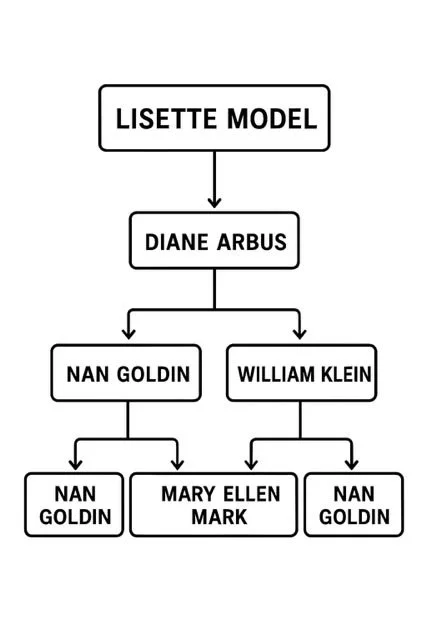
• Her most famous student was Diane Arbus, whose raw, intimate style clearly echoes Model’s ethos.
• Other students carried her approach into street, fashion, and art photography.
⸻
5. Position in Photo History
• She bridged European modernist influences (surrealism, expressionism) with the gritty realism of New York street life.
• She was part of the circle around Harper’s Bazaar and PM, contributing to the rise of photography as both journalism and art.
⸻
📷 In short: Lisette Model pioneered a way of photographing people that was uncompromisingly honest and emotionally direct. By showing the human condition in all its rawness—and by teaching others to do the same—she helped open up photography to deeper psychological and artistic possibilities.